
For more than three decades, Jensen Huang and Nvidia were virtually indistinguishable. Dressed in his trademark black leather jacket, the co-founder transformed a modest graphics card startup founded in 1993 into a $4 trillion artificial intelligence powerhouse that became the bedrock of modern computing. That era came to a sudden, stunning halt on Thursday, November 12, 2026, when Nvidia announced that Huang had resigned as president, chief executive officer, and member of the board of directors, effective immediately.
The abrupt departure of the semiconductor industry’s most recognizable figure sent immediate shockwaves across Silicon Valley, Wall Street, and Washington. Rather than a planned retirement, Jensen Huang’s resignation followed a cascading series of revelations regarding undisclosed workplace relationships and an extramarital affair with a businesswoman suspected by U.S. intelligence officials of having ties to Beijing. With Chief Financial Officer Colette Kress stepping in as interim CEO and longtime director Harvey C. Jones appointed as Nvidia’s first-ever board chair, the world’s most consequential chipmaker now faces its biggest leadership test since its inception.
Inside the Scandal That Forced Jensen Huang Out
While Nvidia’s official press release thanked Huang for his “immeasurable contributions” without detailing the reasons behind his exit, the resignation capped days of intense scrutiny triggered by explosive investigative reporting and an internal board probe.
The crisis erupted on November 8, 2026, when The New York Times reported that U.S. government surveillance indicated Huang had been involved in an extramarital relationship with Alice Huang (also known as Huang Le), a Chinese businesswoman and former top executive at Singapore-based cloud computing firm Megaspeed. American intelligence officials suspected Alice Huang of acting as a conduit feeding sensitive information directly to Beijing—an allegation the Chinese government firmly denied.
The geopolitical stakes were heightened by Megaspeed’s commercial footprint. Shipment records analyzed by short-selling firm Culper Research indicated that Megaspeed’s Malaysian subsidiary, Speedmatrix, imported roughly $4 billion worth of server equipment built with Nvidia chips between late 2024 and early 2026. Although Singapore’s Ministry of Home Affairs stated that its own earlier investigation into Megaspeed’s server declarations did not involve espionage and found insufficient evidence of legal offenses—even though authorities barred Alice Huang from re-entering Singapore in February 2026—the FBI opened a separate inquiry into the relationship. Megaspeed maintained that it had cooperated with U.S. export compliance inspections.
Following the November 8 report, Nvidia’s board of directors announced an independent investigation into claims that its CEO had been targeted by a foreign intelligence effort. Within days, the governance crisis deepened dramatically:
- Direct-Report Relationship Exposed: On November 11, The New York Times reported that Huang had also engaged in an extramarital affair with Kimberly Powell, a senior Nvidia executive who reported directly to him, raising severe corporate governance and compliance concerns.
- Emergency Board Action: According to The Wall Street Journal, 10 of Nvidia’s 11 board directors voted to remove Huang during an emergency meeting on the evening of November 11, resulting in a formal resignation filed with the SEC the following morning.
- Additional Allegations: Shortly after the resignation became public, Reuters reported that Huang had allegedly been involved in a third workplace relationship with an unnamed female Nvidia employee.
Who Is Leading Nvidia Now? Inside the Executive Shakeup
To stabilize operations and reassure global enterprise customers, Nvidia’s board immediately enacted a dual-track leadership transition designed to separate executive management from board oversight.
| Leadership Role | Appointee | Background & Mandate |
| Interim CEO & CFO | Colette Kress | Nvidia CFO since September 2013; former senior finance executive at Cisco and Microsoft. Retains CFO duties while leading daily operations during the CEO search. |
| Chair of the Board | Harvey C. Jones | Longtime Nvidia director, venture investor, and former CEO and Executive Chairman of Synopsys. Appointed as Nvidia’s first-ever board chair. |
| Permanent CEO | Search Underway | The board has initiated a formal search evaluating both internal executives and external candidates. |
In internal memos sent to employees following the announcement, Colette Kress emphasized continuity, noting that Nvidia’s product roadmaps, customer commitments, and engineering momentum remain uninterrupted. Kress—widely respected on Wall Street as a primary architect of Nvidia’s capital strategy during its historic AI boom—scheduled a company-wide all-hands meeting for November 18, 2026, to address staff directly. Meanwhile, Harvey C. Jones underscored the board’s full confidence in Kress while pledging a rigorous search for a permanent chief executive.
Wall Street and Washington React: Stock Plunge and Export Control Fallout
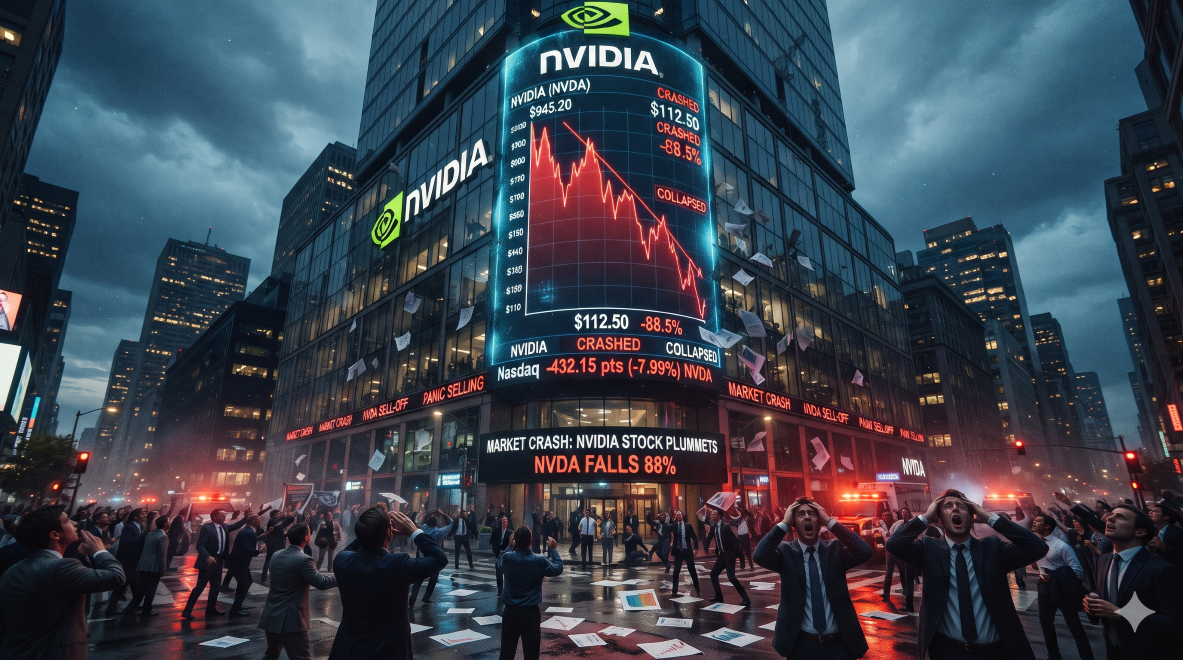
Because Nvidia’s market capitalization carries immense weight across global equity benchmarks, Jensen Huang’s resignation triggered immediate market volatility. Shares of Nvidia (NASDAQ: NVDA) tumbled between 13% and 14% at Thursday’s opening bell, dragging down both the S&P 500 and the tech-heavy Nasdaq Composite as investors priced in sudden leadership uncertainty.
Prominent tech analysts offered a nuanced assessment of the sell-off. Wedbush Securities analyst Dan Ives lowered his price target on Nvidia from $300 to $225 per share without Huang at the helm, calling the scandal a “black eye moment” for Huang’s legacy and a dark day for the U.S. tech sector. However, Ives maintained an optimistic outlook on Nvidia’s underlying fundamentals, noting that the company remains two to three years ahead of its closest semiconductor competitors and that global hyperscaler demand for AI infrastructure is unlikely to slow down because of a change in the C-suite.
In Washington, D.C., the fallout quickly turned political:
- Calls for Stricter Chip Export Controls: Lawmakers from both parties seized on the national security dimensions of the scandal. Rep. Ted Lieu (D-Calif.) argued against permitting advanced AI chip sales to China, while House Minority Leader Hakeem Jeffries called for Congress to receive a classified briefing on the intelligence findings.
- White House Commentary: President Donald Trump—who had initially described Huang as an “honorable man” earlier in the week—praised Huang’s business record on Thursday while publicly floating Apple executive chair and former CEO Tim Cook as an ideal candidate to take over Nvidia.
What Jensen Huang’s Exit Means for the Global AI Race
For enterprise buyers, cloud providers, and rival chipmakers like AMD and Broadcom, Nvidia without Jensen Huang represents uncharted territory. Over 33 years, Huang cultivated a flat, high-velocity engineering culture defined by relentless product cycles and tight software-hardware integration through the CUDA ecosystem. Competitors have long struggled to match not just Nvidia’s GPU architecture, but Huang’s singular ability to evangelize accelerated computing to world leaders and Fortune 500 CEOs alike.
Yet institutionalizing Nvidia’s leadership could also usher in a new phase of corporate governance. Appointing Harvey C. Jones as an independent board chair resolves a long-standing governance critique regarding concentrated executive authority. In the short term, all eyes turn to Tuesday, November 17, 2026, when Kress will lead Nvidia’s scheduled third-quarter fiscal 2027 earnings call—an event that will serve as her first major public test in calming institutional investors.
Navigating a Post-Jensen Future
Jensen Huang’s resignation closes one of the most remarkable founder-led chapters in modern business history, ending in a sudden governance and national security crisis that overshadowed decades of technological triumph. While the immediate shock has rattled financial markets and invited heightened congressional scrutiny over semiconductor exports, Nvidia’s technological moat remains formidable. How effectively Colette Kress and the newly structured board execute the upcoming CEO search—and prove that Nvidia’s dominance is built into its engineering DNA rather than a single personality—will define the next decade of artificial intelligence.