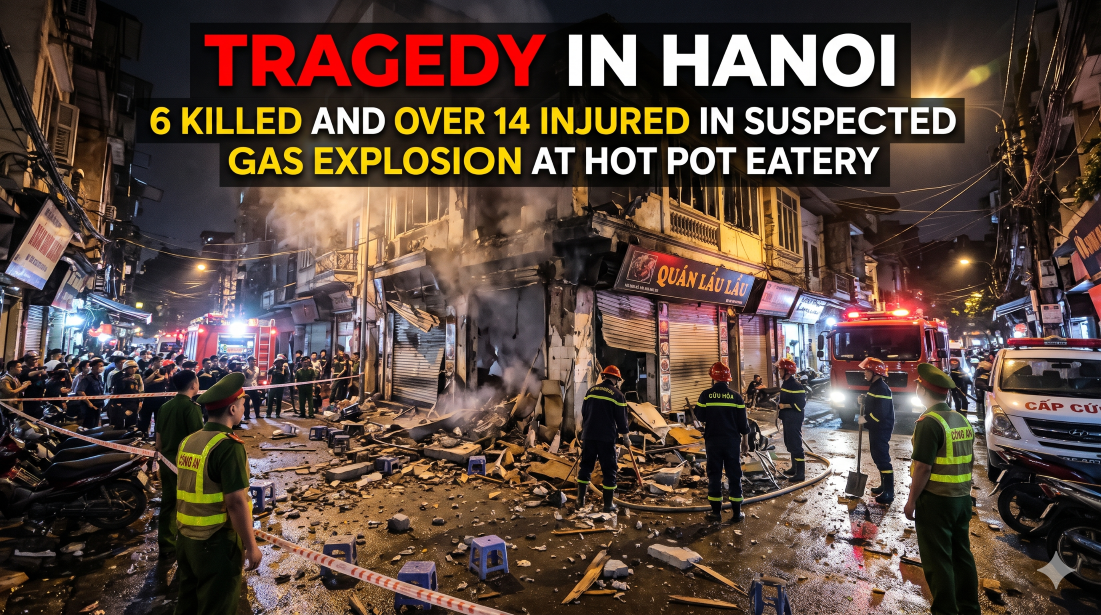
A devastating suspected gas explosion ripped through a hot pot eatery in Hanoi, Vietnam, on Tuesday morning, November 24, 2026, leaving six people dead and more than 14 others injured. What began as an ordinary weekday morning in Vietnam’s bustling capital turned into a scene of destruction and urgent rescue operations as emergency crews rushed to pull victims from shattered glass, twisted metal, and collapsed interior fixtures.
The blast—which sent shockwaves across the surrounding neighborhood and damaged neighboring storefronts—has prompted an immediate multi-agency investigation into liquefied petroleum gas (LPG) handling, commercial kitchen infrastructure, and municipal fire safety enforcement across Hanoi’s densely packed dining districts.
Morning Chaos in Hanoi: How the Suspected Hot Pot Eatery Blast Unfolded
According to initial accounts from witnesses and local emergency responders, the explosion struck the hot pot restaurant on Tuesday morning, November 24, 2026, with sudden, violent force. Nearby residents and shopkeepers reported hearing a deafening boom followed by the sound of shattering glass and falling debris as the pressure wave blew out the eatery’s storefront windows and interior partitions.
Within minutes, thick smoke and dust billowed onto the street while passersby and neighboring merchants rushed toward the damaged premises to assist dazed survivors before professional emergency units arrived. Local police, fire and rescue brigades, and medical ambulances cordoned off the street, navigating tangled wiring and structural debris to reach those trapped inside.
| Incident Snapshot | Details |
| Date & Time | Tuesday morning, November 24, 2026 |
| Location | Hot pot eatery, Hanoi, Vietnam |
| Confirmed Fatalities | 6 people killed |
| Reported Injuries | More than 14 people injured |
| Suspected Cause | Gas explosion (under formal investigation) |
Paramedics transported the more than 14 injured victims—suffering from burns, blast trauma, and lacerations caused by flying glass and debris—to nearby hospitals in Hanoi for emergency care, while authorities worked through the rubble to account for everyone inside the building at the time of the blast.
Inside the Investigation: Why Hot Pot Restaurants Face Unique Gas Risks
While forensic investigators and fire safety officials in Hanoi are still working to establish the exact ignition source and sequence of failures behind Tuesday’s explosion, authorities have pointed to a suspected gas leak and explosion as the primary focus of the inquiry.
Hot pot dining is one of Vietnam’s most beloved culinary traditions, bringing diners together around simmering broths cooked directly at the table. However, the operational setup of many hot pot eateries introduces distinct safety challenges when compared with conventional restaurant kitchens:
- High Concentration of Gas Cylinders: Many establishments rely on large commercial liquefied petroleum gas (LPG) tanks stored in back kitchens or utility alcoves, as well as portable tabletop butane canisters used directly at customer tables.
- Enclosed Urban Architecture: In Hanoi’s densely built neighborhoods, eateries frequently occupy narrow, multi-story tube houses (nhà ống) with limited natural cross-ventilation. If gas leaks overnight or during morning prep hours in a closed space, heavy LPG vapors can pool near floor level until a routine spark—such as flipping a light switch, igniting a stove, or starting a refrigerator compressor—triggers a catastrophic ignition.
- Aging Valves, Hoses, and Regulators: Continuous heat, grease buildup, and daily cylinder swaps accelerate wear on rubber gas hoses, pressure regulators, and shutoff valves if they are not inspected and replaced on strict maintenance schedules.
- Tabletop Canister Refilling Hazards: Across Southeast Asia, safety regulators have repeatedly warned against the dangerous practice of refilling single-use portable butane canisters or using canisters with worn seals under high heat, which can cause sudden pressure ruptures at dining tables.
Emergency Response and Municipal Crackdown on Urban Fire Safety
Following Tuesday morning’s blast, Hanoi’s municipal authorities mobilized fire prevention police, structural engineers, and local district officials to secure the perimeter, inspect adjacent buildings for structural cracks, and support bereaved families and hospitalized survivors.
The tragedy in Hanoi echoes broader urban safety concerns across Vietnam’s rapidly growing cities, where small commercial eateries, residential apartments, and retail shops frequently share tight quarters along narrow alleyways. Over the past several years, Vietnamese authorities have intensified fire safety inspections for karaoke parlors, mini-apartments, and food-and-beverage venues following high-profile urban fires. Tuesday’s deadly blast is expected to trigger an immediate sweep of commercial gas installations across Hanoi’s hospitality sector, focusing on:
- Mandatory Gas Leak Detection Alarms: Verifying that commercial kitchens and enclosed dining areas have functioning automatic gas sensors paired with solenoid shutoff valves.
- Certified LPG Supply Chains: Auditing restaurants to ensure gas cylinders are sourced exclusively from licensed distributors rather than informal, uninspected refillers.
- Proper Cylinder Storage and Ventilation: Enforcing rules requiring large LPG cylinders to be housed in ventilated, fire-rated enclosures isolated from open flames and electrical panels.
- Clear Emergency Exits: Ensuring narrow ground-floor dining rooms maintain unobstructed escape routes free of parked motorbikes, storage racks, or locked security grilles.
Essential Gas Safety Practices for Commercial Eateries and Diners
As investigators examine the wreckage in Hanoi to determine accountability, fire safety specialists emphasize that commercial gas explosions are overwhelmingly preventable when rigorous maintenance and daily operating protocols are followed:
- Conduct Morning Leak Checks Before Ignition: Staff arriving for morning prep should open doors and windows to ventilate closed dining rooms before turning on electrical switches or lighting burners, checking immediately for any odor of mercaptan (the sulfur-like scent added to detect gas leaks).
- Use Braided Steel-Reinforced Gas Lines: Replacing standard rubber tubing with armored, commercial-grade gas hoses reduces the risk of heat damage, accidental cuts, or rodent chew-throughs.
- Never Use Substandard Tabletop Burners: Restaurants serving tabletop hot pot should use induction cooktops wherever electrical capacity permits, or strictly inspect portable gas stoves to ensure canisters lock cleanly without hissing or overheating.
- Train Staff on Immediate Shutoff Procedures: Every kitchen and floor employee should know the exact location of the main gas shutoff valve and understand never to operate electrical switches if a gas leak is suspected.
A Sobering Reminder for Urban Hospitality
The November 24, 2026 explosion at a Hanoi hot pot eatery—claiming six lives and injuring more than 14 others—is a heartbreaking loss for families and the wider community in Vietnam’s capital. Beyond the immediate grief and ongoing hospital recovery for the injured, the tragedy serves as an urgent wake-up call for restaurant operators and municipal regulators alike: in densely populated urban neighborhoods, strict adherence to gas safety standards is not merely a regulatory formality, but a vital safeguard that stands between everyday hospitality and sudden catastrophe.